
"macro coffee"
170 article(s) found

Introduction of Manor Theodotos in San Juan, Honduras
Professional coffee knowledge exchange more coffee bean information please follow the coffee workshop (Wechat official account cafe_style) introduction to the eight major coffee producing areas in Honduras according to IHCAFE data, Honduran coffee can be divided into six major producing areas, mainly located in the western and southern Copan, Obalaca Opalaca), Montecillos (Montecillos), Gongma Agua (Co)

Chongqing barista training Brester College Coffee training course Chongqing Brester is good?
Professional coffee knowledge exchange more coffee bean information please follow the coffee workshop (Wechat official account cafe_style) Beresta Coffee College barista interest class: the curriculum covers: beginner class, experience class. In the process of teaching, we should learn the theoretical knowledge with the history and culture of coffee and the etiquette of coffee, and improve the skills by combining the actual operation of a variety of coffee utensils. Coffee

Special aroma coffee flavor description of Ecuador Hasunda Coffee Garden
The national emblem of Ecuador was launched in 1900, which is similar to the national emblem of Colombia. A ferocious American condor vulture spreads its wings above the national emblem. It is the national bird of Ecuador, symbolizing sovereignty and independence. The design of Ecuador's national emblem is unique, which fully shows the amorous feelings of the country: Mount Chimborazo, Ecuador's highest peak, is covered with snow and stands towering against the blue sky.

Coffee Shop New Year Marketing Coffee Brand in 2023
Professional coffee knowledge exchange More coffee bean information, please pay attention to coffee workshop (Weixin Official Accounts cafe_style) More fine coffee beans, please add private WeChat Qianjie coffee, micro signal: qjcoffeex Time flies! The Spring Festival is coming, the Year of the Tiger is coming to an end ~ the Year of the Rabbit is coming! coffee

"New Coffee"-- the situation of breaking the "tradition" and "the unity of the world"
Coffee ranks first among the three largest beverages in the world, is the second largest trade commodity in the world (only after oil), and is an important raw material for medicine, food and light chemical industry. At present, the global coffee culture and drinking coffee are woody coffee, and mainly produced in Vietnam, Brazil, Colombia, Indonesia and other Central America, Africa, Asia and other regions near the equator. There are only clouds in our country.
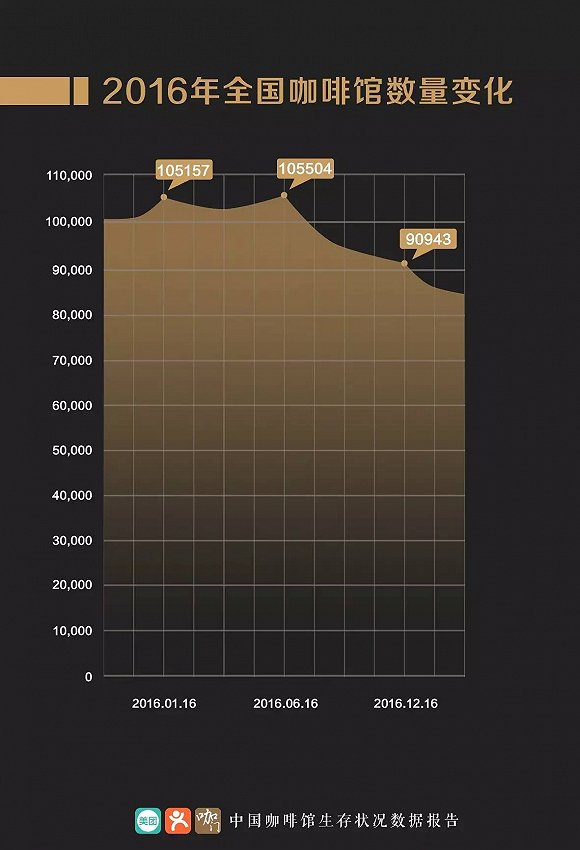
How many cafes are there in China? What's the living condition?
In the era of experience consumption, today, when the customer group is younger and iterative, there has never been a new category, which is so favored by young people. It is not only a symbol, a culture, but also a new industry full of vitality. Its consumer market is growing at an annual rate of 16%, several times the world average. It's all too fast. Today, "Jiamen" and "Meituan Dianping Research Institute" are launched.

Introduction of Old Pine Manor in La Paz District, Honduras Coffee Manor
Professional coffee knowledge exchange more coffee bean information please pay attention to the coffee workshop (Wechat official account cafe_style) Honduras has always been in the boutique coffee market in the top several, but Honduras has the advantages of natural environment, soil, altitude, climatic conditions are very good, neighboring Guatemala, El Salvador, Nicaragua, there are also advanced coffee production, Hongdu
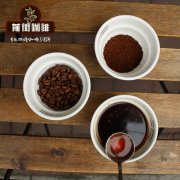
Boutique coffee beans | must miniature batches be better than bulk batches? what's the difference between them?
There are some very flexible definitions in coffee, and micro and large lots (or community lots, I like to refer to them) are different terms depending on the person you want to ask. So let's consider: what's the difference between bulk batches and micro batches? Are they equal in mass? Who is right for whom? Or is it sometimes a better choice? What is a miniature batch? From trace amounts
A brief introduction to Brazilian Coffee
Coffee varieties: both Arabica and Robusta are raw and manufactured, of which Arabica accounts for 70% to 80%. Among Arabica coffee varieties, there are Modo Novo, Catuai, Bourbon, Maragoripe and so on. Coffee harvest can usher in three or four harvest seasons in a year, and mechanical picking is extremely widespread. The path of picking is very different from that of other masterpieces. Mechanical picking
Introduction of Santa Cruz Manor to the flavor and taste of Ecuadorian coffee producing area
Ecuador has a presidential system. On 26 November 2006, Correa, a candidate of the Sovereign Motherland Movement, was elected president in the second round of presidential elections and took office on 15 January 2007. Immediately after taking office, Coe promoted the convening of the Constituent Assembly. On April 15, 2007, Eritrea decided to hold a Constituent Assembly in a referendum with an approval rate of 81.72%. In September, Eritrea held the election of representatives to the Constituent Assembly, the leader of the ruling party.

Taste of Brazilian Coffee Flavor Manor area introduces Brazilian boutique coffee beans
As the largest coffee producer in the country, Brazil supplies commercial beans and fine beans for the global coffee market. Instant coffee is also a critical component of coffee production in Brazil. Western coffee grows mostly at the height of 2000-3000 feet feet, about 500-100m. There are also heights up to 4000 feet, about 1200 m. However, absolutely pay other East Africa, Central and South America need manufacturing countries, easily 5000 feet

Nicaraguan Coffee picking experience introduces the unique charm of Nicaraguan Coffee
Professional barista communication Please follow the series of "clap, clap, clap" sounds in the coffee workshop (Wechat official account cafe_style), which woke me up from my sleep. For a second or two, the darkness in front of my eyes did not become clear because of pupil dilation. At that moment, I remembered that I was in an isolated valley with no electricity. The sun went down for only a few hours, but not on the farm.

Coffee cultivation: harvest in Nicaraguan Coffee Farm
Professional barista communication please follow the coffee workshop (Wechat official account cafe_style) beat, clap, clap a series of claps, wake me up from my sleep. For a second or two, the darkness in front of my eyes did not become clear because of pupil dilation. At that moment, I remembered that I was in an isolated valley with no electricity. The sun went down for only a few hours, and there was no computer in the farm

Introduction to the Historical varieties of Brazilian Coffee beans the graded flavor and taste characteristics of Brazilian water-washed coffee beans
Follow the caf é (Wechat official account vdailycom) found that Fairview Cafe opened a small shop of its own Brazilian coffee varieties: Arabica and Robusta are produced, of which Arabica accounts for 70% to 80%. Compared with Sikong coffee, Arabica coffee varieties are Modo Novo, Catuai, Bourbon, Maragoripe and so on. The coffee harvest can be reached three times a year.

What kind of coffee beans are grown in Brazil? what are the advantages of growing coffee in Brazil?
Professional coffee knowledge exchange more information about coffee beans Please follow the coffee workshop (official Wechat account cafe_style) mention the origin of coffee, the first thing people think of is Brazil in South America, because it is the largest coffee producer in the world. There are many kinds of coffee in Brazil, most of which are unwashed and sun-dried, and are classified according to the name of the state of origin and the port of transport.

Talking about Coffee: fried Coffee Curve and Boat (part two)
Professional barista communication Please follow the coffee workshop (Wechat official account cafe_style) do you know the difference between boiling water and stir-fried coffee beans? I use the simplest analogy to inspire colleagues to think. Chemical reactions aside, the physical changes of coffee beans during heating are already quite complex: if the same bean is fried in the same way (that is, the same roasting curve), the taste may not be the same.
The origin of coffee in Dominica what are the two main characteristics of coffee in Dominica?
Coffee in Dominica is grown in highlands and lowlands, and its taste is slightly different. The upland is sour, but the taste is rich; the lowland is less sour and tastes smoother. Boutique coffee has prevailed in recent years. Some Dominican estates produce high-quality coffee beans with rich aroma, mellow taste, moderately bright sour taste, and the more famous Puerto Rico beans or Jamaica.

Flavor description treatment of Hassanda Coffee Garden in Ecuador introduction to the planting environment of varieties in the area of taste
The Ecuadorian national flag is rectangular, with a ratio of length to width at 2:1. The flag is made up of three rectangles connected by yellow, blue and red. Yellow occupies 1 quarter of the flag, while red and blue each account for 4. The national emblem is painted in the central government. Yellow symbolizes the wealth, sunshine and food of the country; blue symbolizes the blue sky, the sea and the magnificent Amazon; red symbolizes the blood of the patriots fighting for freedom and justice, Ecuador's national emblem Ecuador Guado.

La Paz, La Paz District of Honduras | Finca Los Pinoskaduai SHG wind of Old Pine Manor
Professional coffee knowledge exchange more coffee bean information please follow the coffee workshop (Wechat official account cafe_style) La Paz District of Honduras La Paz | Old Pine Manor Finca Los Pinos Kaduai SHG flavor and brewing? Honduras National Victory 2017-Los Pinoskaduai, Abel Mejia, Old Pine Manor from La Paz, La Paz

Introduction of Santa Barara Manor in San Juan Coffee producing area of Honduras
Honduras is a major coffee grower in Central America. 15 of the country's 18 provinces have coffee plantations, and more than 100000 coffee growers have created nearly a million jobs in the country. In recent years, coffee exports from Honduras have shown an upward trend. In 2006, the country's total coffee exports reached 3.8 million bags, generating income of 402 million US dollars. In 2007, the national coffee export reached 4.2 million bags, generating income.